West Nile virus (WNV) Detection Kit
2026-03-13
Human hepatitis B virus surface antigen, HBsAg ELISA Kit(Qualitative)
2026-03-13Human Treponema Pallidum (TP) Antibodies ELISA Kit
Product Number: ELK015001
Shipping and Storage
- 2-8℃, stored away from light and moisture
- Validity period: 6 months
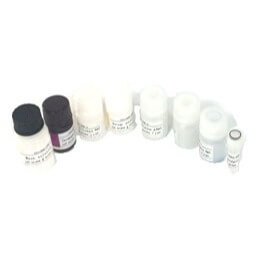
Component
| Component | 96T | 48T |
| Microplate (96-well, pre-coated) | 12 holes×8 strips | 12 holes×4 strips |
| Negative control | 0.5mL | 0.5mL |
| Positive control | 0.5mL | 0.5mL |
| Detect antibody HRP | 10mL | 5mL |
| 20× washing buffer | 25mL | 15mL |
| Sample diluent | 6mL | 3mL |
| Substrate A | 6mL | 3mL |
| Substrate B | 6mL | 3mL |
| Stop solution | 6mL | 3mL |
| Plate Sealer | 2 sheets | 2 sheets |
Description
The reagent kit adopts indirect enzyme-linked immunosorbent assay (ELISA). Add the specimen and HRP labeled detection antibody to the pre coated micro well with Treponema pallidum antigen, incubate and thoroughly wash. Using substrate TMB for color development, TMB is converted to blue under the catalysis of peroxidase and to the final yellow under the action of acid. Measure the absorbance (OD value) at 450nm wavelength using an enzyme-linked immunosorbent assay (ELISA) reader and compare it with the CUTOFF value to determine the presence or absence of Treponema pallidum antibody (TP Ab) in the specimen.
Specimen collection and storage
- Serum: Use test tubes without pyrogen and endotoxin, avoid any cell irritation during the operation, collect blood, centrifuge at 3000 rpm for 10 minutes, and quickly and carefully separate serum and red blood cells.
- Plasma: anticoagulant with EDTA, citrate or heparin. Centrifuge at 3000 rpm for 30 minutes and collect the supernatant.
- Cell supernatant: Centrifuge at 3000 rpm for 10 minutes to remove particles and polymers.
- Tissue homogenate: Crush the tissue by adding an appropriate amount of physiological saline. Centrifuge at 3000 rpm for 10 minutes and collect the supernatant.
- Storage: If the sample is not tested in a timely manner after collection, please pack it according to a single dose and freeze it at -20℃ to avoid repeated freezing and thawing. Thaw it at room temperature and ensure that the sample is evenly filled and thawed.