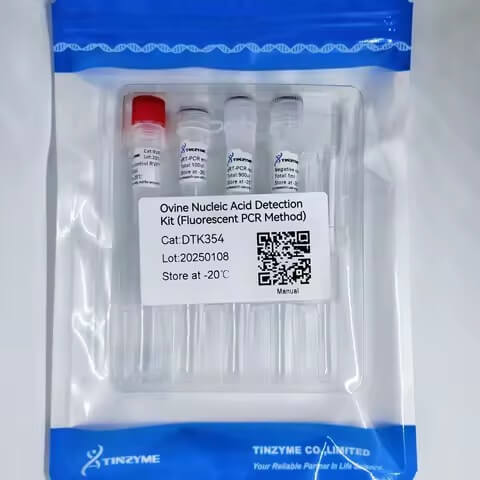
Ovine Nucleic Acid Detection Kit (Fluorescent PCR Method)
2025-04-02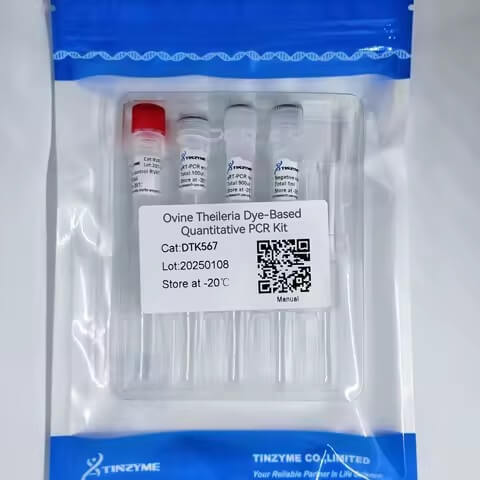
Ovine Theileria Dye-Based Quantitative PCR Kit
2025-04-02Influenza B Virus Victoria/Yamagata Lineages (Bv/By) Nucleic Acid Detection Kit (Dual Fluorescent PCR Method)
Product Number: DTK518
Shipping and Storage
- Store in dark at -20℃, with a shelf life of 12 months.
- Low temperature transportation cannot exceed 4 days; After opening, store in the dark at -20℃. The expiration date has no impact. Avoid repeated freezing and thawing, freezing and thawing 6 times will not affect the detection effect.
Component
| Component | 25 T | 50 T | Main components |
| qRT-PCR reaction solution | 300μL | 600μL | Tris, KCl, MgCl2, dNTPs, etc |
| qRT-PCR enzyme mixture | 100μL | 200μL | Reverse transcriptase, RNAse inhibitor Taq enzymes, etc |
| Primer probe BV/BY | 100μL | 200μL | Primer probe |
| Positive control BV/BY | 50μL | 50μL | Plasmids containing target detection gene fragments |
| Negative control | 50μL | 50μL | Water treated with diethyl carbonate |
Description
This kit is designed based on the principle of fluorescence PCR technology, with specific primers and Taqman probes designed for the Victoria/Yamagata strain of influenza B virus. Amplification is performed using a fluorescence quantitative PCR instrument to achieve detection of influenza B virus Victoria/Yamagata strain nucleic acid.
Application
This kit is used for qualitative detection of Victoria/Yamagata strain (BV/BY) nucleic acid of influenza B virus, and for auxiliary diagnosis and epidemiological monitoring of Victoria/Yamagata strain infection of influenza B.
Specimen collection
- Sample types: nasal/pharyngeal swabs, sputum, bronchoalveolar lavage fluid; Cell and chicken embryo cultures; Poultry throat swabs and feces; Environmental specimens and other samples.
- Storage conditions: The collected specimens should be sent for testing in a timely manner. If tested within 24 hours, they should be stored at 4℃. If stored for more than 24 hours, it is best to store them at -70℃ (if there is no -70℃ storage condition, they should be stored in a -20±5℃ freezer for no more than one month). During specimen transportation, repeated freezing and thawing should be avoided for more than 6 times.