Blood and Tissue DNA Mini Kit
2026-05-12
Small Scale Oligonucleotide Synthesizer
2026-05-12Porcine circovirus universal (PCV-U) Detection Kit
Product Number: DTL0802
Shipping and Storage
- Store below 30°C. It is valid for 12 months.
- Transport at normal temperature, not suggested over 14 days.
- Opened but not completely used the all components should be stored at (-20±5)°C. It is recommended to separate in PCR tubes before refrigeration to avoid repeated freezing and thawing of all reagents next time. It is not recommended to repeat the freeze-thaw cycle more than 7 times.
- Date of manufacture and term of validity: see the label.
Component
| Component | 48T |
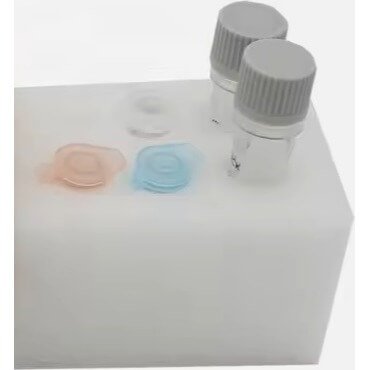
| PCV-U PCR Master Mix | Lyophilized powder ×1 Bottle |
| Positive Control | 100μL |
| Negative Control | 1mL |
| Redissolved Diluent | 1.5mL |
- Do not mix reagents from different batches.
- The reaction system is lyophilized powder that contains all components required for fluorescence PCR, including Taq enzyme, reverse transcriptase, primers, probes, dNTPs, and Mg2+.
Description
This kit designs specific primers and probes for the conservative region of the porcine circovirus gene, uses fluorescent PCR technology to perform in vitro amplification and detection of the universal DNA of porcine circovirus, and is used for clinical etiological diagnosis of suspected infected animals.
Application
Porcine circovirus is a contagious, congenital tremor and multi-system dysfunction disease in weaned piglets caused by porcine circovirus. The virus has two serotypes, PCV1 and PCV2, and PCV1 is non-pathogenic. Weaned piglets infected with PCV2 have shortness of breath, difficulty, diarrhea, anemia, obvious lymphoid tissue lesions and progressive weight loss.
This kit is suitable for detecting porcine circovirus universal in samples such as lung, lymph node tissue, and whole blood, and is used for auxiliary diagnosis of porcine circovirus universal infection.
Applicable instruments
Real-time fluorescence PCR instrument with VIC,FAM channels.
Specimen collection
- Applicable sample type: Tissue samples (including porcine lymph nodes, spleen, lung, kidney and liver), serum, feces, cell culture.
- Sample collection: Tissue sample: Collect the main organs (lymph nodes, spleen, lungs, kidneys and liver) of dead pigs (including aborted fetuses) or culled pigs and place the sample in sterilized 15mL centrifuge tubes and send it to the laboratory. Take 1g of thawed tissue, cut it into pieces, add 2mL PBS for grinding, prepare tissue homogenate, centrifuge at 8000 r/min for 5 min, and take the supernatant for subsequent nucleic acid extraction; Serum sample: Use a sterile syringe to draw no less than 5mL of venous blood from the tested pig, place it in a sterile centrifuge tube, place it at an angle at room temperature or 37℃ to allow natural coagulation for 20 min to 30 min, centrifuge it at 2000 r/min to 3000 r/min for 10 min, and aspirate the supernatant into a new centrifuge tube for direct nucleic acid extraction; Fecal sample: Take 1g of fresh pig feces, put it into a 15mL sterile centrifuge tube, add 5mL PBS, and mix well. Centrifuge at 3000 r/min for 10 min, take the supernatant, and transfer it to a 1.5mL centrifuge tube for subsequent nucleic acid extraction.
- Sample storage and transportation: The collection or processing sample should not exceed 24 hours under the conditions of 2℃ ~ 8℃. If long-term preservation is needed, it should be stored below -70℃, and the freezing fusion should not exceed 3 times.