Bifidobacterium spp. (BD) Nucleic Acid Detection Kit (Fluorescent PCR Method)
2026-07-08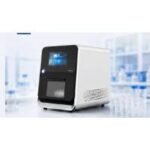
32 Channe Automated Nucleic Acid Extractor
2026-07-09Sarchomyces Cervisea Nucleic Acid Detection Kit (Fluorescent PCR Method)
Product Number: DTK813
Shipping and Storage
- Store away from light at -20°C; shelf life is 12 months.
- Low-temperature transportation shall not exceed 5 days; after opening, store away from light at -20°C with no impact on shelf life. Avoid repeated freeze-thaw cycles; up to 10 freeze-thaw cycles will not affect detection performance.
Component
| Component | 50T |
| Saccharomyces cerevisiae Primer Mix | 100μL |
| Probe qPCR Amplification Mix | 900μL |
| LactobacillusPositive control | 100μL |
| Lactobacillus Negative control | 100μL |
Description
This kit is designed with specific primers and probes targeting highly conserved regions of the Saccharomyces cerevisiae genome. When the reaction system contains Saccharomyces cerevisiae genomic template, the PCR reaction proceeds and releases fluorescent signals. A real-time fluorescent quantitative PCR instrument is adopted to monitor and output signals of corresponding channels in real time during PCR, enabling qualitative analysis of detection results.
Application
Saccharomyces cerevisiae, also known as baker’s yeast or budding yeast, is the yeast most widely associated with humans. Its cells are spherical or oval with a diameter of 5–10 μm, and it reproduces via budding.
Saccharomyces cerevisiae is widely applied in food, pharmaceutical and other industries. In the food industry, it is used for wine brewing, bread and pastry production; it also has certain applications in the pharmaceutical field. As a unicellular eukaryote, Saccharomyces cerevisiae possesses the fundamental characteristics of all eukaryotic cellular life activities, along with numerous advantages for experimental microorganisms including clear genetic background, fast growth rate and convenient operation.
Applicable instruments
ABI series, Bio-Rad series, Roche LC480, QIAGEN Rotor-Gene series, Tianlong Gentier-96E/96R series, Yaru MA6000, Hongshi SLAN-96S/96P and other multi-channel real-time fluorescent quantitative PCR instruments.
Specimen collection
- Sample Selection: Saccharomyces cerevisiae samples can be collected from natural environments, specific production areas and industrial production processes. Research on these samples helps to understand the genetic diversity of yeast and its role in fermentation. Select appropriate samples for detection according to actual conditions during collection.
- Aseptic Operation: Aseptic operation must be implemented during sample collection to avoid contamination by exogenous bacteria.
- Storage: Samples can be stored at 2~8°C for no more than 72 hours; long-term storage is available below -70°C, but repeated freeze-thaw cycles shall be limited to a maximum of 5 times.