Quantitative Diagnostic Kit for Epstein-Barr Virus (EBV) DNA
2026-03-12Diagnostic Kit for Herpes Simplex Virus Type 1/2 DNA
2026-03-12Diagnostic Kit for BK Polyomavirus DNA
Product Number: DTL0421
Shipping and Storage
- Store below 30°C. It is valid for 12 months.
- Transport at normal temperature, not suggested over 14 days.
- Opened but not completely used BA PCR Master Mix should be stored at (-20±5)°C. It is recommended to separate in PCR tubes before refrigeration to avoid repeated freezing and thawing of all reagents next time. Storage time should not exceed 21 days.
- Date of manufacture and term of validity: see the label.
Component
| Component | 48T |
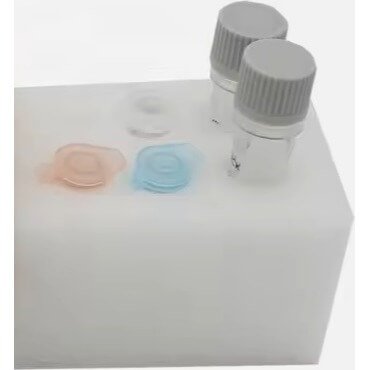
| BKV PCR Master Mix | Lyophilized powder ×1 Bottle |
| Positive Control | 100μL |
| Negative Control | 1mL |
| Redissolved Diluent | 1.5mL |
- Do not mix reagents from different batches.
- The reaction system is lyophilized powder that contains all components required for fluorescence PCR, including Taq enzyme, reverse transcriptase, primers, probes, dNTPs, and Mg2+.
Description
This kit uses specific primers and probes designed for the conservative region of the BK virus gene, and uses fluorescent PCR technology to perform in vitro amplification and detection of BK virus nucleic acid, which is used for clinical etiological diagnosis of suspected infectious materials. The kit is provided with an Internal Control, which can monitor whether there is PCR inhibitor in the sample to be tested by detecting whether the internal control is normal or not, so as to avoid false negative PCR.
Application
BK virus is a member of the polyomavirus family. After infection, it usually exists in a latent state and can be reactivated when the host's immune function is low. Primary infection with BK virus occurs in childhood and is generally present in the human urinary tract and peripheral blood leukocytes. About 0.5% to 20% of infected people will experience BKV activation, leading to viral replication, which generally does not cause renal damage. However, in people receiving immunosuppressive therapy, especially patients after renal transplantation, the BKV reactivation rate will increase significantly and may lead to BKV associated nephropathy (BKVAN).
The kidney is the main site of BKV latent infection in healthy people. BKV can be detected in the urine of 10% to 60% of patients after kidney transplantation. Most of these patients present with asymptomatic viremia or temporary abnormalities in transplanted kidney function. Occasionally, tissue damage caused by the virus can be found in the resected transplanted kidney specimens. Studies related to BKVAN have found that about 5% of kidney transplant recipients may develop BKVAN, of which about 45% will experience transplanted kidney failure.
This product uses PCR fluorescent probe technology to detect BK virus nucleic acid in human serum, plasma and urine samples, and can be used for auxiliary diagnosis of BK virus infection.