RNA Storage Tube
2026-03-09
Diagnostic Kit for BK Polyomavirus DNA
2026-03-12Quantitative Diagnostic Kit for Epstein-Barr Virus (EBV) DNA

Product Number: DTL0205
Shipping and Storage
- Store below 30°C. It is valid for 12 months.
- Transport at normal temperature, not suggested over 14 days.
- Opened but not completely used BA PCR Master Mix should be stored at (-20±5)°C. It is recommended to separate in PCR tubes before refrigeration to avoid repeated freezing and thawing of all reagents next time. Storage time should not exceed 21 days.
- Date of manufacture and term of validity: see the label.
Component
| Component | 48T |
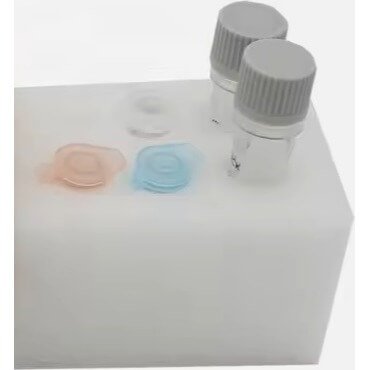
| EBV PCR Master Mix | Lyophilized powder ×1 Bottle |
| EBV quantitative standard substance 1 | Lyophilized powder ×1 Tube |
| EBV quantitative standard substance 2 | Lyophilized powder ×1 Tube |
| EBV quantitative standard substance 3 | Lyophilized powder ×1 Tube |
| EBV quantitative standard substance4 | Lyophilized powder ×1 Tube |
| Positive Control | 100μL |
| Negative Control | 1mL |
| Redissolved Diluent | 1.5mL |
- Do not mix reagents from different batches.
- The reaction system is lyophilized powder that contains all components required for fluorescence PCR, including Taq enzyme, primers, probes, dNTPs, and Mg2+.
Description
This kit uses multiple fluorescent PCR detection technology to achieve quantitative detection of EBV DNA in the sample to be tested by using a pair of specific primers and a specific fluorescent probe for EBV. The kit is provided with an Internal Control, which can monitor whether there is PCR inhibitor in the sample to be tested by detecting whether the internal control is normal or not, so as to avoid false negative PCR.
Application
Epstein-Barr Virus (EBV) is a virus discovered by Epstein and Barr in 1964 from tumor cell culture while studying African childhood lymphoma (BL). It is the pathogen of infectious mononucleosis and is related to BL and nasopharyngeal carcinoma.EBV is widespread, with 80-90% of adults having experienced EBV infection. Most young children who are infected have no obvious symptoms, or may develop mild pharyngitis and upper respiratory tract infection, and about 50% develop infectious mononucleosis. The virus is mainly transmitted through saliva, and can also be transmitted through blood transfusion. After infection, EBV may proliferate in the epithelial cells of the oropharynx, and then the virus infects the B cells of the local mucosa, which enter the blood circulation and cause systemic EBV infection.
This kit is suitable for detecting EB virus in samples such as serum, and is used for auxiliary diagnosis of EB virus infection.