Tris-glycine SDS-PAGE ordinary electrophoresis buffer
2026-08-03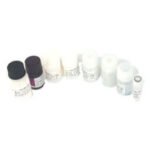
Mouse Urolithin A
2026-08-05Stool DNA Mini Kit
Product Number: DNK2301
Shipping and Storage
- Buffer ASL or Buffer CB may precipitate and precipitate at low temperatures. It can be fully dissolved again by taking a water bath at 70℃ for a few minutes, restoring clarity and transparency, and then cooled to room temperature before use.
- Proteinase K is stored in a ready-to-use glycerol buffer and transported at room temperature. Upon receipt, it should be stored at room temperature for at least 6 months, at 4℃ for 12 months, and at -20℃ for 2 years
- Avoid volatilization, oxidation, and pH changes caused by prolonged exposure of reagents to the air. Each solution should be covered tightly after use.
Components
| Component | Storage | DNK2301 50 Preps |
| Balance Buffer | RT | 5ml |
| Buffer ASL | RT | 70 ml |
| Buffer AB | RT | 5 ml |
| Buffer CB | RT | 11 ml |
| Buffer PE | RT | 16 ml |
| Add anhydrous ethanol according to the instructions on the bottle label before the first use | ||
| Buffer WB | RT | 13 ml |
| Add anhydrous ethanol according to the instructions on the bottle label before the first use | ||
| Buffer EB | RT | 15 ml |
| Proteinase K | 4°C | 1 ml |
| Adsorption column AC | RT | 50 |
| Collection tube (2ml) | RT | 50 |
This reagent kit can be stored at room temperature for 12 months without affecting its effectiveness.
Description
The conventional DNA purification method cannot effectively remove a large number of inhibitory factors present in feces, leading to the failure of downstream experiments, such as PCR not being able to amplify the required fragments. This reagent kit adopts a DNA adsorption column and a new unique solution system, which can effectively remove various inhibitory factors that affect downstream experiments (such as PCR) in animal feces, and efficiently recover genomic DNA from feces. Animal fecal samples were resuspended with special Buffer ASL and treated at 70 ℃ for 5 minutes to lyse bacteria; Centrifuge to remove insoluble impurities, and Protein K digestion to further remove proteins and impurities; Then, the genomic DNA is selectively adsorbed onto the silica matrix membrane in a highly dissociated salt state. Through a series of rapid rinsing centrifugation steps, Buffer IR and Buffer WB remove impurities such as cellular metabolites and proteins. Finally, the pure genomic DNA is eluted from the silica matrix membrane by low salt Buffer EB.
Features
- No toxic reagents such as phenol are required, and no steps such as ethanol precipitation are required.
- Fast and simple, the operation of a single sample can generally be completed within 40 minutes.
- Multiple column washes ensure high purity, with a typical OD260/OD280 ratio of 1.7~1.9, which can be directly used for PCR, Southern blot, and various enzyme digestion reactions.
Note
- All centrifugation steps are completed at room temperature using a traditional desktop centrifuge with a speed of up to 13000rpm.
- You need to bring your own isopropanol (for the steps of adding isopropanol, it is recommended to use isopropanol first, and ethanol can also be used as a substitute without isopropanol). RNase A (optional).
- Preheat the required water bath to 70℃ for later use before starting the experiment.