Diagnostic Kit for High-risk Human Papillomavirus (HPV) DNA (Type 16, 18, 31, 33, 35, 39, 45, 51, 52, 56, 58, 59, 66, 68)
2026-02-09
Human HDC ELISA Kit
2026-02-11Quantitative Diagnostic Kit for Human Cytomegalovirus (HCMV) DNA
Product Number: DTL0437
Shipping and Storage
- Store below 30°C. It is valid for 12 months.
- Transport at normal temperature, not suggested over 14 days.
- Opened but not completely used the all components should be stored at (-20±5) °C. It is recommended to separate in PCR tubes before refrigeration to avoid repeated freezing and thawing of all reagents next time. It is not recommended to repeat the freeze-thaw cycle more than 7 times.
- Date of manufacture and term of validity: see the label.
Component
| Component | 48T |
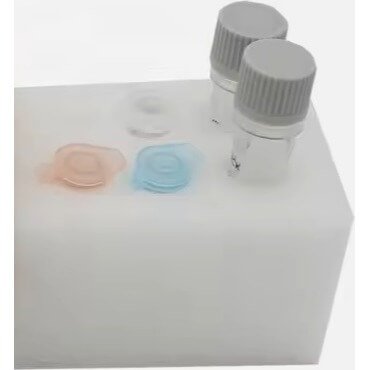
| CHIKV RT-PCR Master Mix | Lyophilized powder ×1 Bottle |
| HCMV quantitative standard substance 1 | Lyophilized powder ×1 Bottle |
| HCMV quantitative standard substance 2 | Lyophilized powder ×1 Bottle |
| HCMV quantitative standard substance 3 | Lyophilized powder ×1 Bottle |
| HCMV quantitative standard substance 4 | Lyophilized powder ×1 Bottle |
| Positive Control | 100μL |
| Negative Control | 1mL |
| Redissolved Diluent | 1.5mL |
- Do not mix reagents from different batches.
- The reaction system is lyophilized powder that contains all components required for fluorescence PCR, including Taq enzyme, reverse transcriptase, primers, probes, dNTPs, and Mg2+.
Description
This kit uses multiple fluorescent PCR detection technology to achieve quantitative detection of HCMV DNA in the sample to be tested by using a pair of specific primers and a specific fluorescent probe for HCMV. The kit is provided with an Internal Control, which can monitor whether there is PCR inhibitor in the sample to be tested by detecting whether the internal control is normal or not, so as to avoid false negative PCR.
Application
This kit is suitable for the quantitative detection of Human Cytomegalovirus nucleic acid (HCMV DNA) in human serum or urine samples in vitro, and the test results are used for the auxiliary diagnosis of Human Cytomegalovirus. The test results are not the only indicators for the evaluation of the patient's condition, and the condition must be comprehensively analyzed in combination with the patient's clinical manifestations and other laboratory tests. HCMV infection is very common in the population, and the HCMV antibody-positive rate among adults in developed countries is about 50%. 10% to 15% of children are first infected with HCMV before the age of 5, and the proportion of infections drops significantly after the age of 5. The infection rate among adults is increasing by 1% to 2% year by year, which may be related to close contact and sexual contact with infected people. HCMV can be isolated from saliva, cervical secretions, semen, urine and white blood cells of patients who have been infected for several months to several years. Infants with congenital and perinatal infection with HCMV shed the virus for a longer period of time, with 35% of infected individuals shedding the virus for up to 5 years. Studies have shown that infections in children are very common in kindergarten and can be transmitted to seronegative parents.