Diagnostic Kit for Japanese Encephalitis Virus RNA
2026-02-09Quantitative Diagnostic Kit for Dengue Virus RNA (Real-Time PCR Method)
2026-02-09Diagnostic Kit for Chikungunya Virus RNA
Product Number: DTL0307
Shipping and Storage
- Store below 30°C. It is valid for 12 months.
- Transport at normal temperature, not suggested over 14 days.
- Opened but not completely used the all components should be stored at (-20±5)°C. It is recommended to separate in PCR tubes before refrigeration to avoid repeated freezing and thawing of all reagents next time. It is not recommended to repeat the freeze-thaw cycle more than 7 times.
- Date of manufacture and term of validity: see the label.
Component
| Component | 48T |
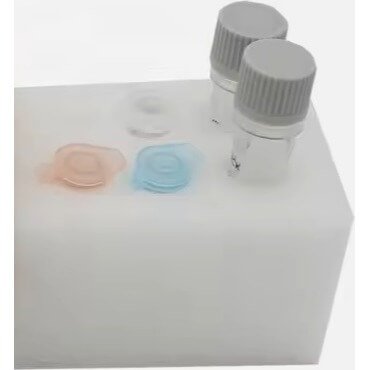
| CHIKV RT-PCR Master Mix | Lyophilized powder ×1 Bottle |
| Positive Control | 100μL |
| Negative Control | 1mL |
| Redissolved Diluent | 1.5mL |
- Do not mix reagents from different batches.
- The reaction system is lyophilized powder that contains all components required for fluorescence PCR, including Taq enzyme, reverse transcriptase, primers, probes, dNTPs, and Mg2+.
Description
This kit uses real-time fluorescence PCR to detect Chikungunya virus (CHIKV) with one pair of primers and one specific fluorescent probe respectively. The method was used for the qualitative detection of Chikungunya virus in serum samples. The kit is provided with an Internal Control, which can monitor whether there is PCR inhibitor in the sample to be tested by detecting whether the internal control is normal or not, so as to avoid false negative PCR.
Application This kit is intended for the in vitro qualitative detection of Chikungunya virus nucleic acids in human serum samples, and it is suitable for the auxiliary diagnosis of diseases caused by Chikungunya virus. Chikungunya fever is an acute infectious disease caused by Chikungunya virus (CHIKV) and transmitted by aedes mosquitoes. The main onset symptoms include sudden onset of fever, chills, trunk rash, severe arthralgia and headache, etc., which may be accompanied by nausea, vomiting, photophobia, conjunctival congestion, abdominal pain or bleeding. Common laboratory tests for chikungunya virus infections include routine blood tests, blood biochemical tests, pathogenic and serologic tests.