Horseradish Peroxidase (HRP)
2026-03-31
Diagnostic Kit for Human Rhinovirus RNA
2026-04-01Diagnostic Kit for Respiratory Adenovirus DNA
Product Number: DTL0107
Shipping and Storage
- Store below 30°C. It is valid for 12 months.
- Transport at normal temperature, not suggested over 14 days.
- Opened but not completely used the all components should be stored at (-20±5)°C. It is recommended to separate in PCR tubes before refrigeration to avoid repeated freezing and thawing of all reagents next time. It is not recommended to repeat the freeze-thaw cycle more than 7 times.
- Date of manufacture and term of validity: see the label.
Component
| Component | 48T |
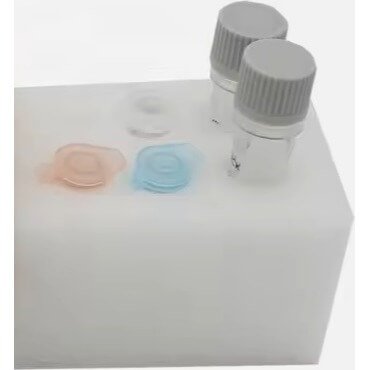
| RADV RT-PCR Master Mix | Lyophilized powder ×1 Bottle |
| Positive Control | 100μL |
| Negative Control | 1mL |
| Redissolved Diluent | 1.5mL |
- Do not mix reagents from different batches.
- The reaction system is lyophilized powder that contains all components required for fluorescence PCR, including Taq enzyme, reverse transcriptase, primers, probes, dNTPs, and Mg2+.
Description
This kit uses the multiplex fluorescent PCR detection technology to to design specific primers and Taqman fluorescent probes for the conserved regions of respiratory adenovirus, so as to realize the qualitative detection of respiratory adenovirus RNA in oropharyngeal swabs. The kit is provided with an Internal Control(IC), which can monitor whether there is PCR inhibitor in the sample to be tested by detecting whether the internal control is normal or not, so as to avoid false negative PCR.
Application
This kit is suitable for the qualitative detection of respiratory adenovirus nucleic acid in human oropharyngeal swab in vitro.
An acute infectious disease caused by adenovirus, which easily invades the respiratory and digestive tract mucosa, conjunctiva, urinary tract and lymph nodes. The main manifestation is acute upper respiratory tract infection (acute respiratory tract infection caused by adenovirus accounts for 2% to 4%), followed by eye and gastrointestinal infections. The general population is susceptible, especially children. About half of the patients are latently infected. Infants and young children are susceptible to adenovirus pneumonia, with severe illness and high mortality rate. The source of infection is patients and latently infected people. The virus is excreted from the respiratory tract and conjunctival secretions, feces and urine, and is transmitted through air droplets, close contact and fecal-oral route.