Recombinant PNGase F
2026-04-29
Diagnostic Kit for Hepatitis A Virus (HAV) RNA
2026-05-11Diagnostic Kit for Hanta Virus RNA
Product Number: DTL0328
Shipping and Storage
- Store below 30°C. It is valid for 12 months.
- Transport at normal temperature, not suggested over 14 days.
- Opened but not completely used the all components should be stored at (-20±5)°C. It is recommended to separate in PCR tubes before refrigeration to avoid repeated freezing and thawing of all reagents next time. It is not recommended to repeat the freeze-thaw cycle more than 7 times.
- Date of manufacture and term of validity: see the label.
Component
| Component | 48T |
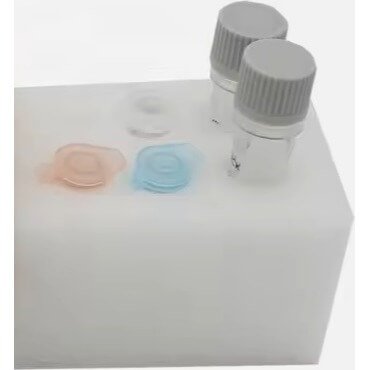
| HV RT-PCR Master Mix | Lyophilized powder ×1 Bottle |
| Positive Control | 100μL |
| Negative Control | 1mL |
| Redissolved Diluent | 1.5mL |
- Do not mix reagents from different batches.
- The reaction system is lyophilized powder that contains all components required for fluorescence PCR, including Taq enzyme, reverse transcriptase, primers, probes, dNTPs, and Mg2+.
Description
This kit employs the TaqMan probe-based real-time fluorescent PCR technique. Specific primers and corresponding probes targeting HFRS-causing hantavirus are designed to amplify and detect hantavirus RNA in vitro using fluorescent PCR, enabling qualitative detection of HFRS hantavirus in specimens. The kit is provided with an Internal Control(IC), which can monitor whether there is PCR inhibitor in the sample to be tested by detecting whether the internal control is normal or not, so as to avoid false negative PCR.
Application
Hantavirus belongs to the genus Hantavirus, family Hantaviridae, order Bunyavirales. It is a group of enveloped, segmented RNA viruses carried by rodents, which can cause damage to human kidneys or lung tissues.
Based on the clinical symptoms following infection, hantaviruses are classified into two categories: one causing hemorrhagic fever with renal syndrome (HFRS), and the other causing hantavirus pulmonary syndrome (HPS). The main clinical manifestations of hemorrhagic fever with renal syndrome include high fever, chills, fatigue, generalized myalgia, and petechiae or ecchymoses on the skin and mucous membranes; in severe cases, the kidneys may be endangered.
More than 40 hantavirus species have been identified to date, among which at least 22 are pathogenic to humans. Major pathogens responsible for hemorrhagic fever with renal syndrome include Hantaan virus (HTNV), Seoul virus (SEOV), Puumala virus (PUUV), and Dobrava virus (DOBV).
This kit is intended for the detection of hemorrhagic fever with renal syndrome (HFRS)-causing hantavirus in whole blood samples. It is suitable for the auxiliary diagnosis of HFRS hantavirus infection and epidemiological investigations.
Applicable instruments
Real-time fluorescence PCR instrument with FAM, VIC channels.
Specimen collection
- Applicable sample type: whole blood sample.
- Sample collection: Collect 3mL to 5mL of venous blood from the patient into an anticoagulant tube and label properly. Whole blood samples can be used directly for nucleic acid extraction.
- Sample storage and transportation: The collection or processing sample should not exceed 24 hours under the conditions of 2℃ ~ 8℃. If long-term preservation is needed, it should be stored below -70℃, and the freezing fusion should not exceed 3 times.