SDS-PAGE Loading Buffer (Reducing, 5x)
2025-04-02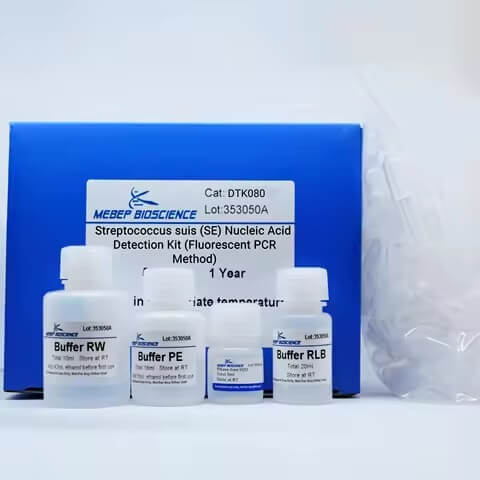
Streptococcus suis (SE) Nucleic Acid Detection Kit (Fluorescent PCR Method)
2025-04-02Cow progesterone colloidal gold test cassette
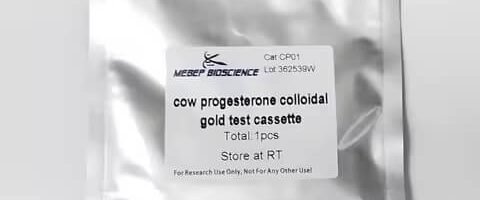
Product Number: CP01
Shipping and Storage
- Validity period: 24 months.
- Storage: Store at room temperature and avoid light.
Description
Progesterone (P4) is a type of steroid hormone found in the corpus luteum and placenta of cows. Changes in pregnancy concentration are a specific indicator of cow egg and fruit activity, and it plays an extremely important role in maternal reproduction and pregnancy maintenance. Therefore, the reproductive activity of cows can be monitored by the concentration of P4. The concentration of P4 exhibits characteristic changes depending on the reproductive physiological stage of the cow, and accurate diagnosis of early pregnancy in cows can be made by detecting progesterone levels.
Application
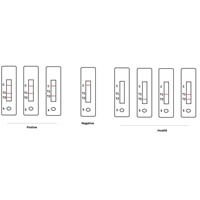
This detection board is used for early pregnancy diagnosis in cattle and has the characteristics of high accuracy, easy operation, rapid detection, room temperature storage, convenient carrying, and safe and harmless to both mother and fetus.
This detection board is mainly suitable for early pregnancy diagnosis of cows and beef cattle, as well as guiding timely artificial insemination.
The estrus cycle of cows is 21 days. Individual differences generally occur between 18-24 days. The timing for early pregnancy testing of mating cows is to start testing on the 18th day after mating, continuously for 5 days. If one day is negative, it indicates that the tested cow is not pregnant. At this time, progesterone should be at its lowest level. It is recommended to mate as soon as possible to effectively improve the conception rate; If all tests are positive after 5 days of connection, it indicates that the tested cow is pregnant and should enter pregnancy management. Another method is to closely observe whether the cattle show signs of estrus from the 18th day after mating. If there are signs of estrus, it can be detected immediately. For those who do not show signs of estrus, a test should be conducted 24 days after mating.
Specimen collection
- Milk sample; Wash the nipple before taking milk, discard the first three pairs of milk, then collect the milk sample in the middle, take 1mL and place it in a small test tube, centrifuge it at 10000rpm for 10 minutes, divide the test tube milk sample into three layers, and use a straw to insert into the bottom layer to suck the milk for later use.
- Saliva: Take 3-5mL of saliva from the mouth and centrifuge at 1500-2000rpm for 5 minutes. Take the supernatant for later use.
- Hair sample: Take 10mg of hair sample from the root of the hair and place it in an extraction tube. Add 3ml of anhydrous ethanol and soak for 2-3 hours, then vortex and shake for 5 minutes. Place it in a centrifuge at 3000rpm for 5 minutes. Take 1mL of ethanol supernatant and transfer it into glass. Dry it in an oven at 70-80℃ and dilute it with 1ml of PBS for later use.
- Urine: can be used directly.
- Blood: Take 1-2mL of anti Wei blood, centrifuge at 2000rpm for 5-10 minutes, and draw plasma for later use. For non anticoagulant blood, let it stand for 30 minutes until the blood coagulates and separates into serum for later use.