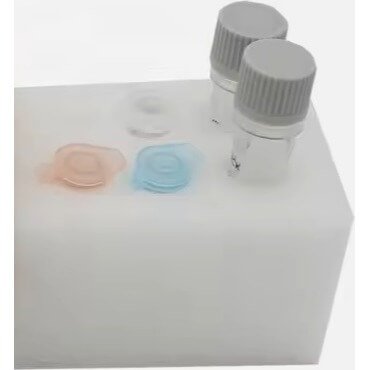
Diagnostic Kit for Hepatitis B virus (HBV) DNA
2026-02-09
Luria-Bertani Broth
2026-02-09Diagnostic Kit for Hepatitis C Virus (HCV) RNA
Product Number: DTL0404
Shipping and Storage
- Store below 30°C. It is valid for 12 months.
- Transport at normal temperature, not suggested over 14 days.
- Opened but not completely used the all components should be stored at (-20±5)°C. It is recommended to separate in PCR tubes before refrigeration to avoid repeated freezing and thawing of all reagents next time. It is not recommended to repeat the freeze-thaw cycle more than 7 times.
- Date of manufacture and term of validity: see the label.
Component
| Component | 48T |
| HCV RT-PCR Master Mix | Lyophilized powder ×1 Bottle |
| Positive Control | 100μL |
| Negative Control | 1mL |
| Redissolved Diluent | 1.5mL |
- Do not mix reagents from different batches.
- The reaction system is lyophilized powder that contains all components required for fluorescence PCR, including Taq enzyme, reverse transcriptase, primers, probes, dNTPs, and Mg2+.
Description
This kit uses multiple fluorescent PCR detection technology to achieve qualitative detection of HCV RNA in the sample to be tested by using a pair of specific primers and a specific fluorescent probe for HCV. The kit is provided with an Internal Control, which can monitor whether there is PCR inhibitor in the sample to be tested by detecting whether the internal control is normal or not, so as to avoid false negative PCR.
Application
This kit is suitable for the qualitative detection of Hepatitis C virus nucleic acid (HCV RNA) in human serum or plasma samples in vitro, and the test results are used for the auxiliary diagnosis of Hepatitis C. The test results are not the only indicators for the evaluation of the patient's condition, and the condition must be comprehensively analyzed in combination with the patient's clinical manifestations and other laboratory tests.
Hepatitis C is a major blood-borne disease. Chronic infection of Hepatitis C virus can lead to chronic inflammation, necrosis and fibrosis of the liver. Some patients may develop liver cirrhosis or even hepatocellular carcinoma, which is extremely harmful to the health and life of patients has become a serious social and public health problem. HCV belongs to the family flaviviridae, and its genome is single-stranded positive-stranded RNA, which is easily mutated. Currently, it can be divided into 6 genotypes and more than 50 different subtypes. HCV indicators include anti-HCV and HCV RNA. Although some patients with acute Hepatitis C can recover by themselves, active treatment should be given to all patients with acute Hepatitis C, because the curative effect in the acute phase is good. In the treatment of chronic Hepatitis C, only interferon is recognized as effective at home and abroad. It should also be treated early. In the recovery period of acute Hepatitis C, more than 70% of patients who choose interferon can be cured, which can make chronic Hepatitis C. The number of patients is greatly reduced. If the patient delays the treatment time in the acute phase, about 60% of the infected patients will develop chronic Hepatitis C, and the possibility of self-healing in the future is very small, so the etiological diagnosis should be carried out as soon as possible.