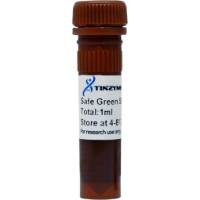

SYBR Green I Nucleic Acid Gel Stain (10000x)
2026-07-03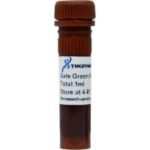
SafeGreen Nucleic Acid Gel Stain
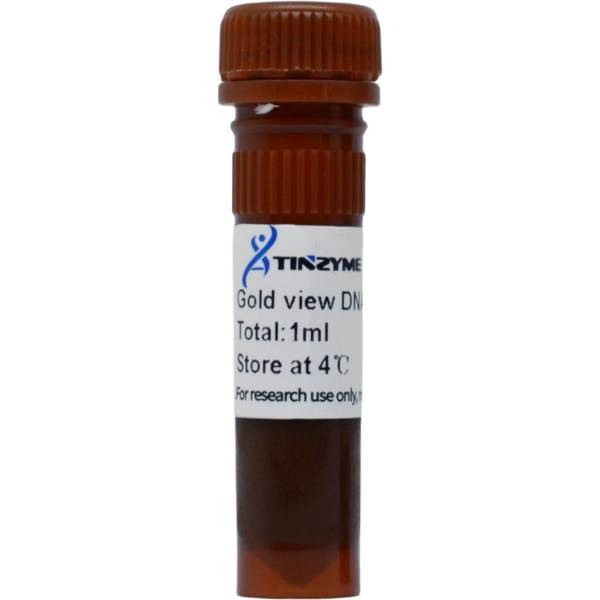
2026-07-03Goldview Nucleic Acid Gel Stain
Product Number: ST03
Shipping and Storage
This product is dissolved in DMSO. Due to the melting point of DMSO being 18.5℃, please let it dissolve at room temperature before use.Sealed and dried at 4°C, minimizing light exposure and minimizing freezing and thawing!
Description
Gold view is a green banded nucleic acid dye, but it may mutate with EB like cells. When using agarose electrophoresis to detect DNA, Gold view can produce a strong fluorescence signal after binding with nucleic acid, and its sensitivity is similar to that of EB, making it identical to EB method. Under UV light, double stranded DNA exhibits green fluorescence, while single stranded DNA exhibits red fluorescence.
Note
- Gold view may have mutagenic effects on cells similar to EB, and the Gold view solution has strong acidity, which can cause certain irritation to the skin and eyes. During operation, strict protection should be taken like EB.
- Repeated melting of agarose gel with gold view may affect the sensitivity of nucleic acid detection, but it is not obvious.
- Gold view can better bind to nucleic acids between pH 3.6 and 7.0, so it is best to use fresh electrophoresis buffer during electrophoresis.
- Since Gold view generates green fluorescence, it is not suitable for taking photos with ordinary monochrome film. Instead, gel imaging system can be used to save images.
- Gel containing Gold view is not suitable for gel recovery test. To conduct a recovery test, please use SYBR Green I nucleic acid dye.
- Gold view is particularly suitable for detecting large DNA fragments (fragments larger than 1kb, with detection sensitivity comparable to EB);When the DNA fragment is less than 1kb, the detection sensitivity is lower than EB, especially for fragments below 500bp, the Gold view may have weak brightness or cannot be detected. If you want to detect small fragments of DNA, please use SYBR Green I nucleic acid dye.
- The thickness of the adhesive should not exceed 0.5cm, as too thick an adhesive can affect the sensitivity of the detection.